 The Blenny Guide
(Valenciennes 1836)

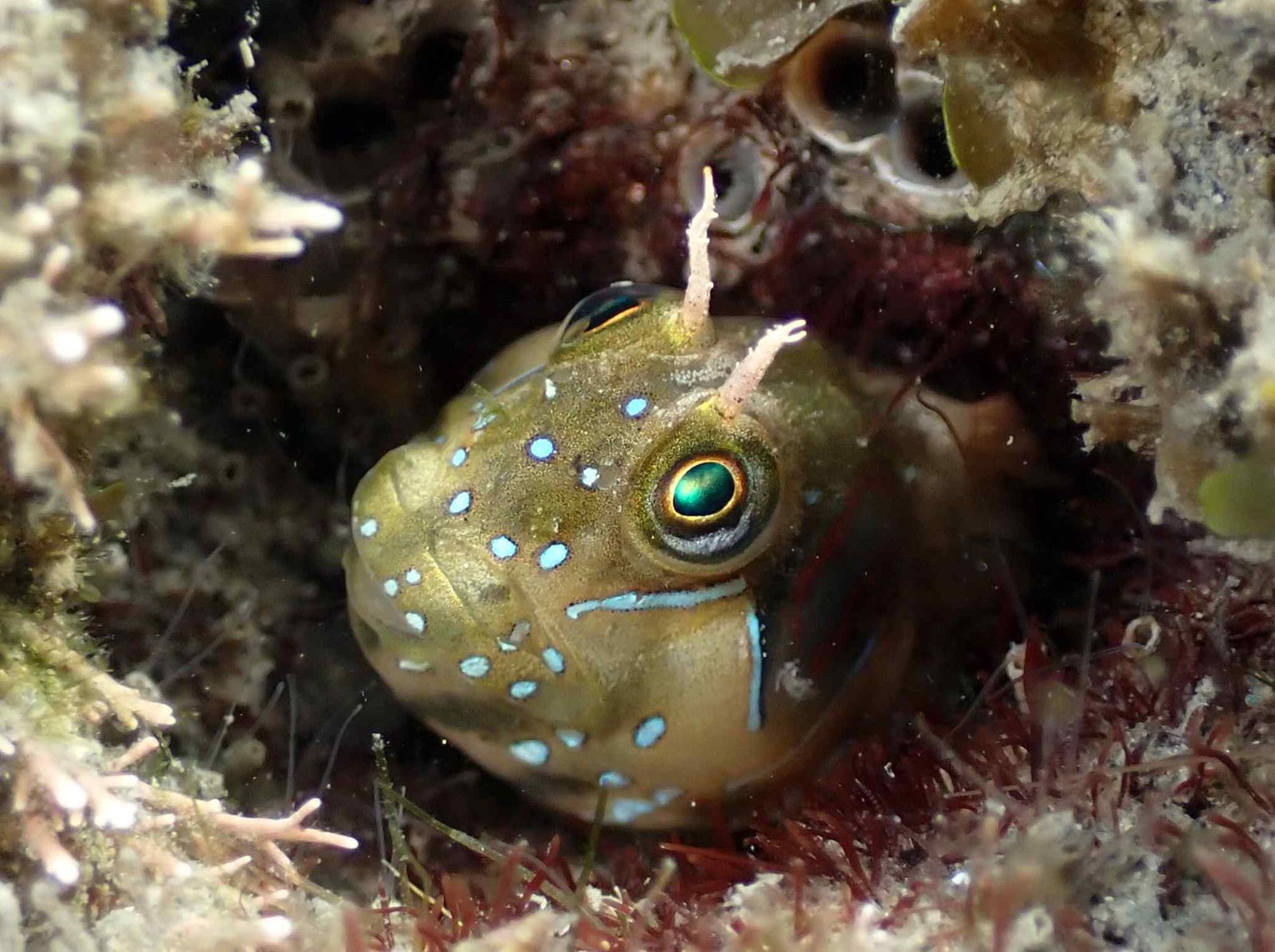
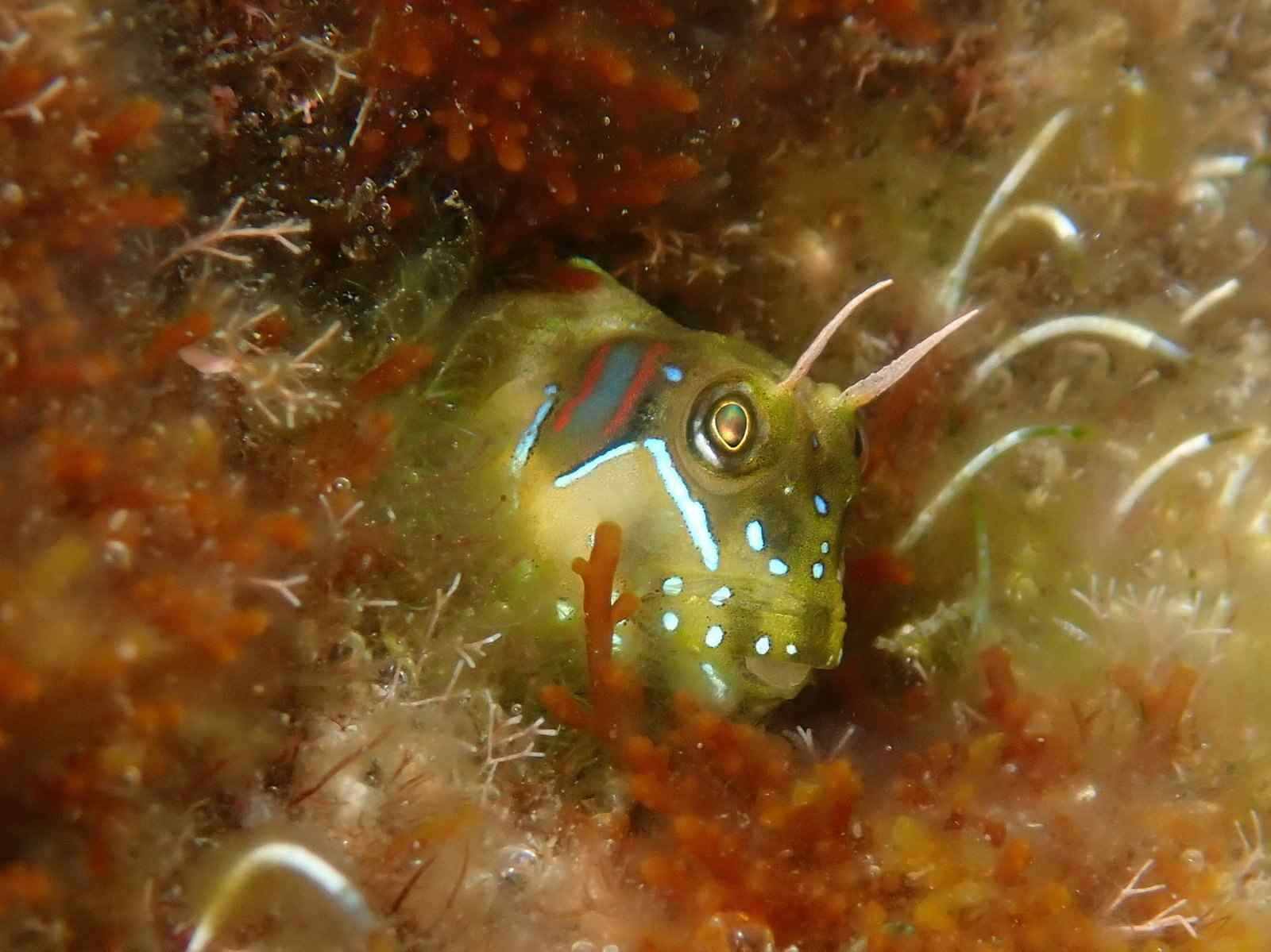
Very short nasal cirri. Orbital cirri long - greater in length than eye diameter - and is either simple or lightly branched at the tip.
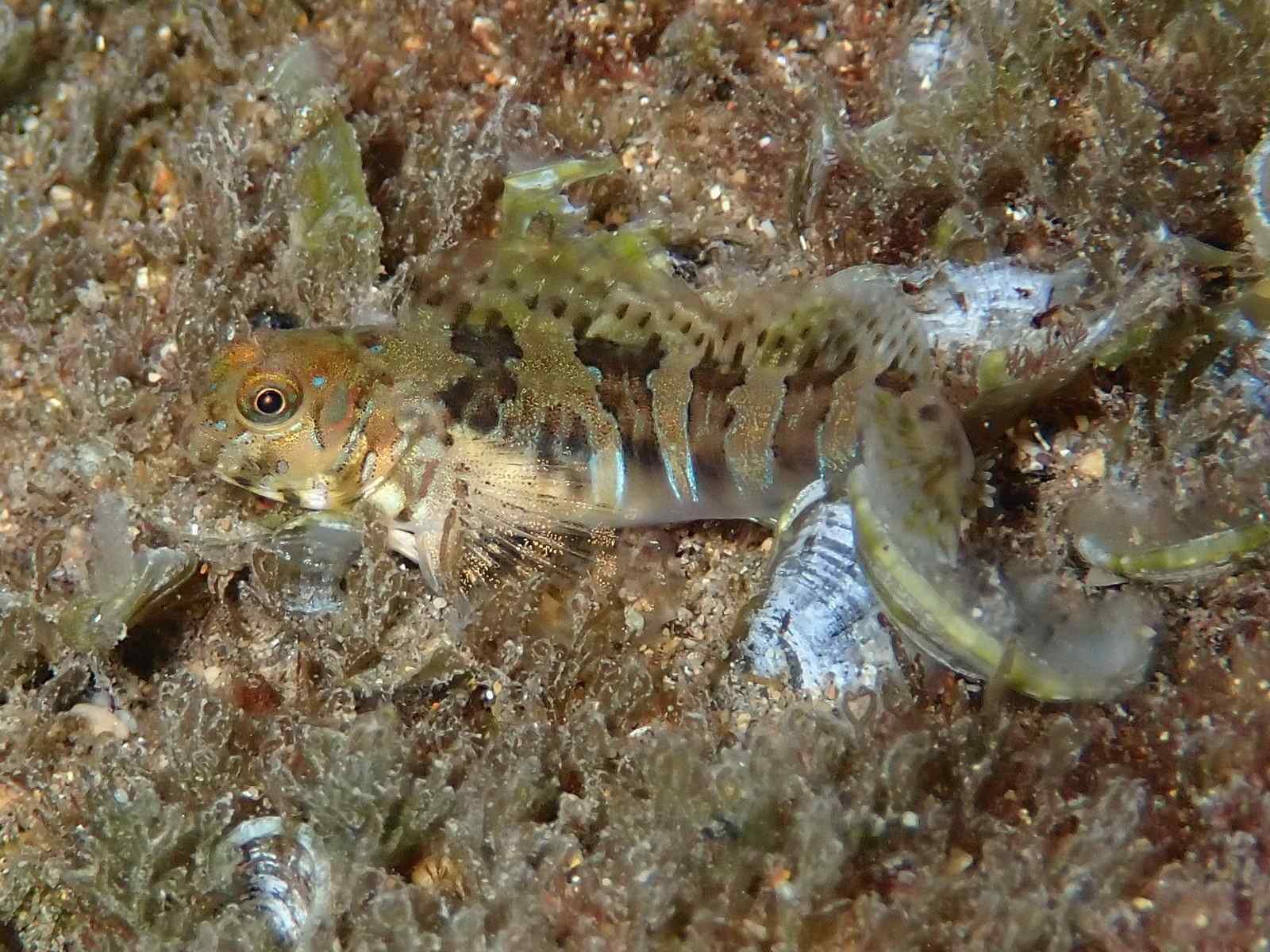
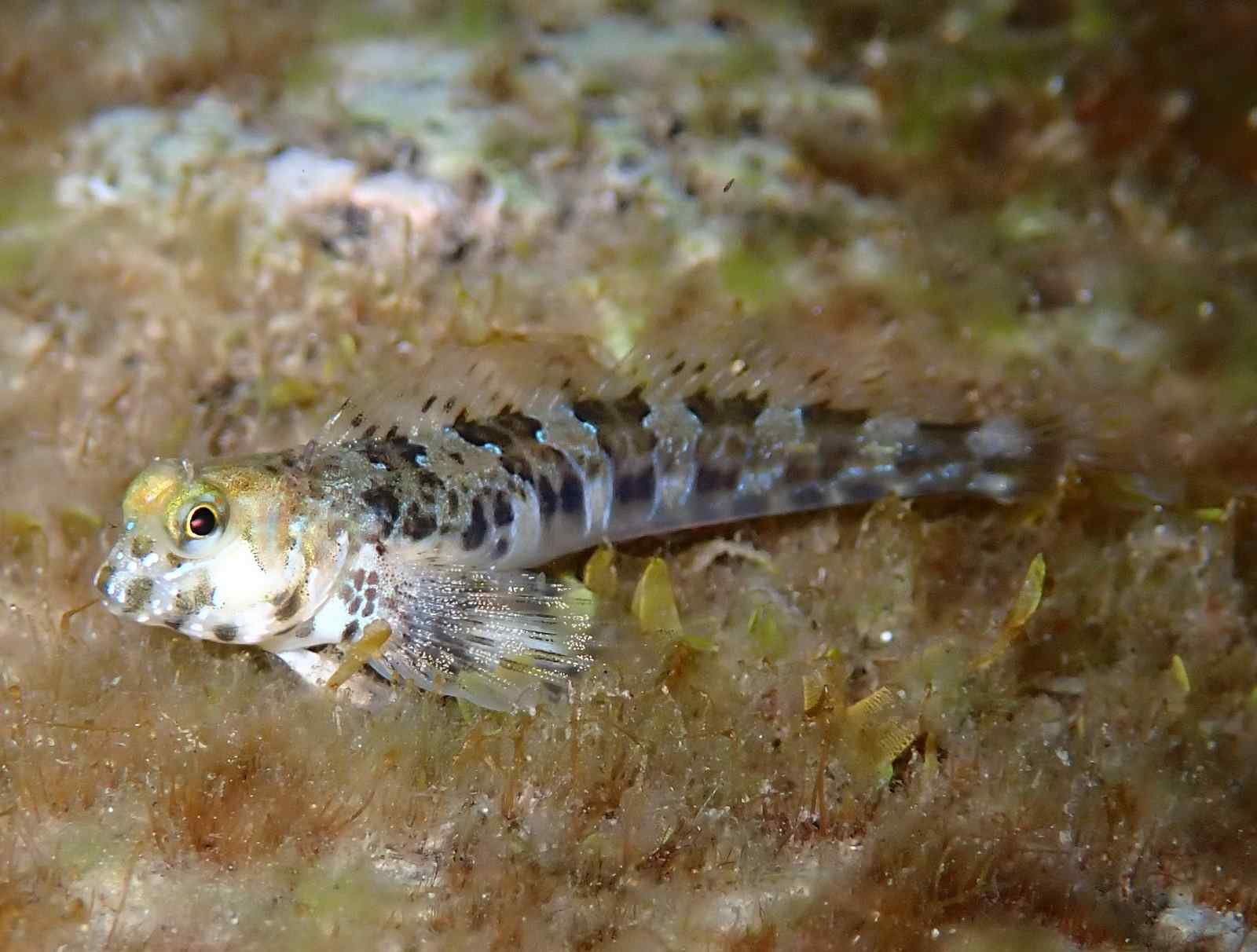
Head darker on top and light below - difference can be small. Bright blue spots, inverted V under eye small dash behind eye and 3 vertical stripes on cheek. Dark stripes on lips and throat. Darker blotch behind eye, ~diameter of eye. Body colour variable, ranges from very pale brown to dark brown, can have red and green hues. ~6 dark bands along body, from upper body reaching down to belly, can be lighter centrally. Bars can be bordered by blue. Belly pale. Very pale individuals may have broken blotches instead of bands.
Reaches TL 8.0 cm / 3.1 in.
Shallow rocky areas.
0 - 3 m / 0 - 10 ft.


No morphological information yet, data is being added...
IUCN Marine Biodiversity Unit 2025. Aidablennius sphynx. The IUCN Red List of Threatened Species. Version 2026-1. Accessed on 27 June 2026.
https://www.iucnredlist.org/
Williams, J. & Craig, M.T. 2014. Aidablennius sphynx. The IUCN Red List of Threatened Species 2014: e.T185168A1775545. Accessed on 03 April 2026.
https://dx.doi.org/10.2305/IUCN.UK.2014-3.RLTS.T185168A1775545.en
Zander, C. D. (1986). Blenniidae. In P. J. P. Whitehead, M.-L. Bauchot, J.-C. Hureau, J. Nielsen, & E. Tortonese (Eds.), Fishes of the North-eastern Atlantic and the Mediterranean (Vol. 3, pp. 1096-1112). UNESCO.