 The Blenny Guide
(Quoy & Gaimard 1824)

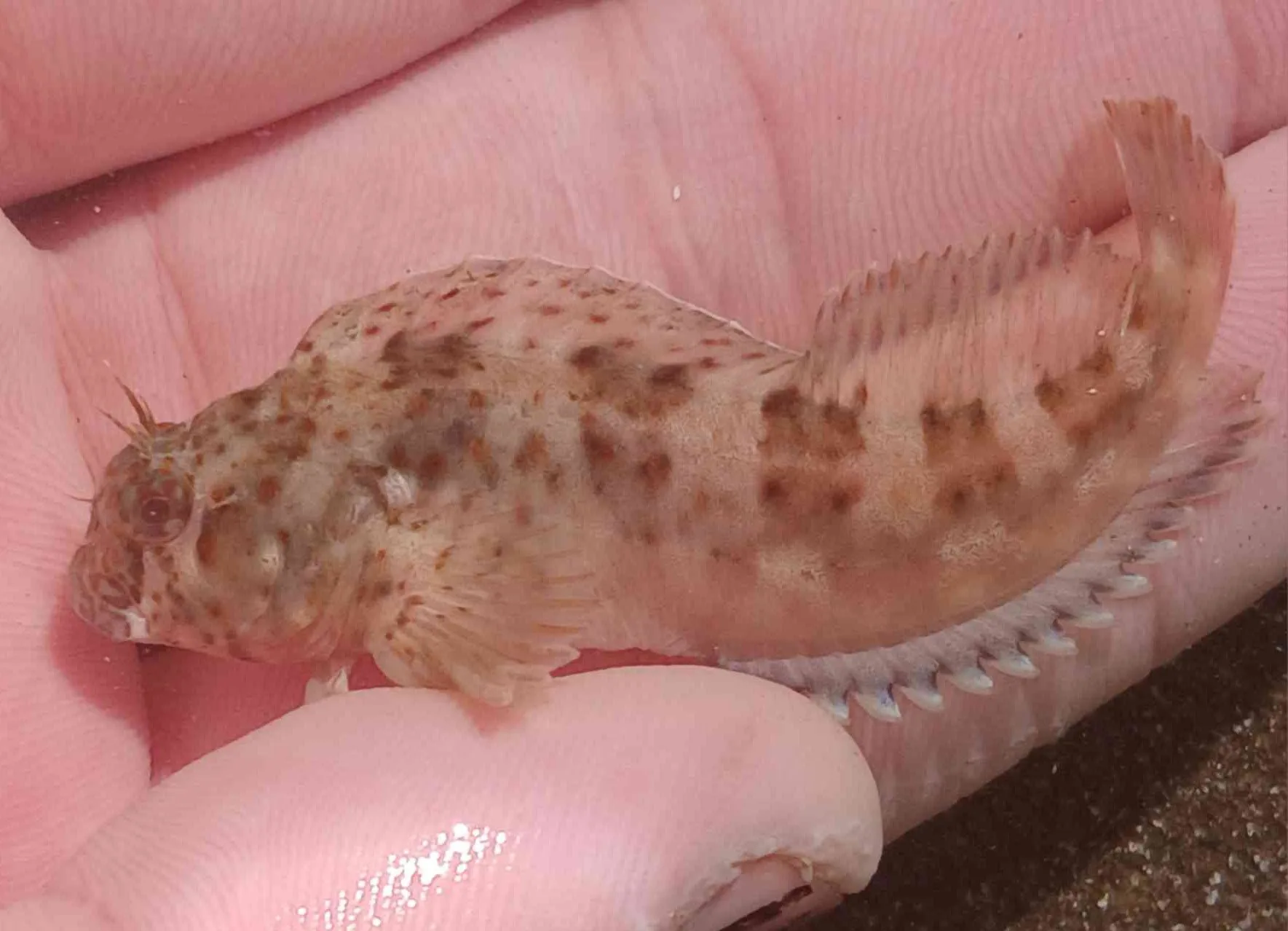
Short orbital cirri with multiple stems but with little branches. May have one, long extending branch which can be greater than 3x the length of the eye diameter; this is not always present and may be a form of sexual dimorphism. Nasal cirri similar with stems.
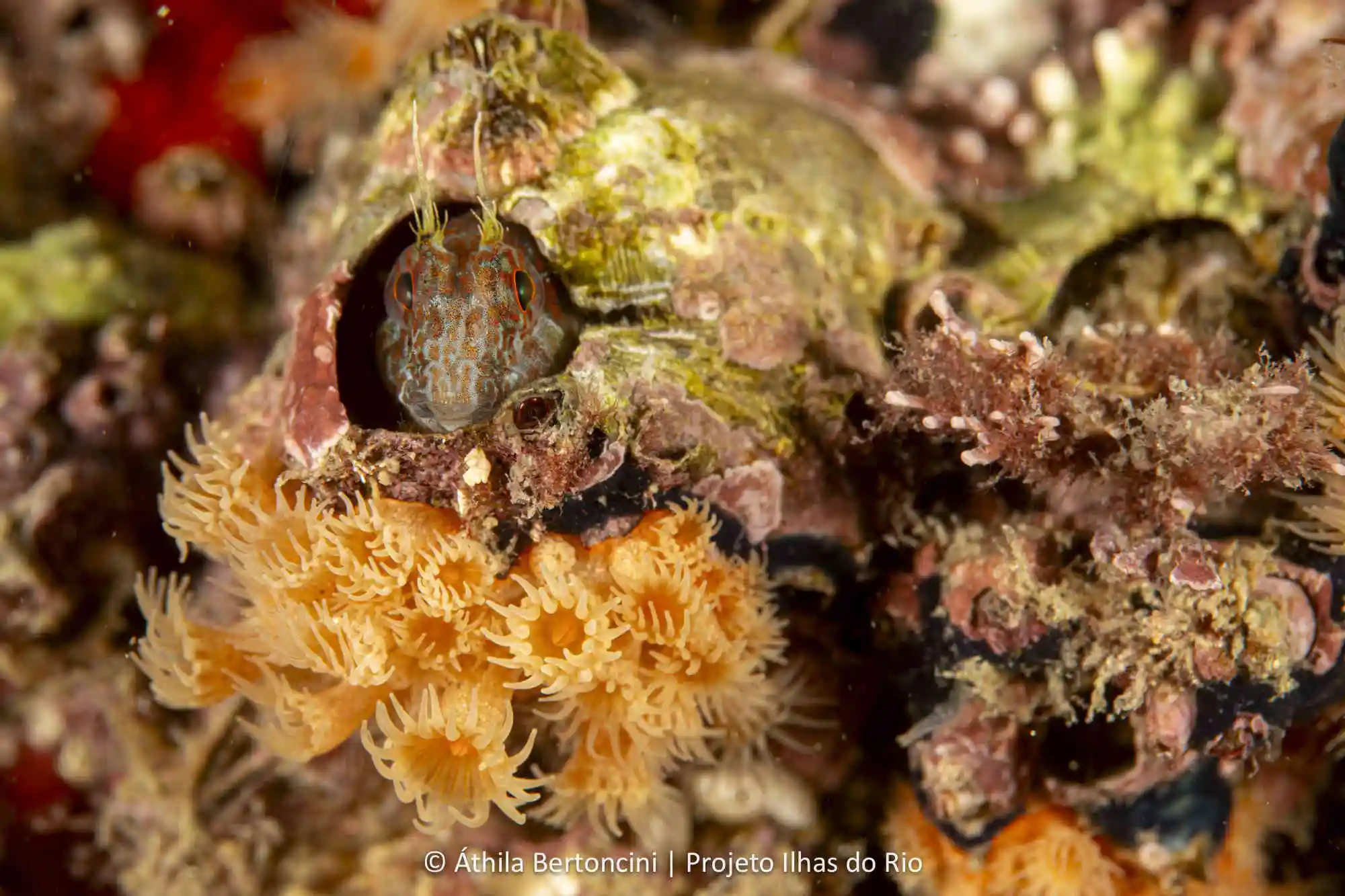
Light olive brown to a rich dark brown. A row of ~6 pairs of two dark bands on the upper body which bleeds upwards onto the dorsal fin. Body and head either lightly or heavily speckled with dark orange blotches and spots. A large, slightly darker blotch on the cheek. A light cream or blue band below the eye. Pectoral fin base cream and heavily flecked with dark orange.
Reaches 8.9 cm / 3.5 in.
Rocky areas and in coral reefs. Found inside empty shells and barnacles when caring for eggs.
0 - 5 m / 0 - 16 ft.


No morphological information yet, data is being added...
International Union for Conservation of Nature 2014. Hypleurochilus fissicornis. The IUCN Red List of Threatened Species. Version 2026-1. Accessed on 16 September 2026.
https://www.iucnredlist.org/
Williams, J.T. & Craig, M.T. 2014. Hypleurochilus fissicornis. The IUCN Red List of Threatened Species 2014: e.T185149A1772425. Accessed on 03 April 2026.
https://dx.doi.org/10.2305/IUCN.UK.2014-3.RLTS.T185149A1772425.en
Rios, M. F., Irigoyen, A. J., Galvan, D. E., & Delpiani, S. M. (2017). Length-weight relationships for three small reef-fishes from the Argentine coast: Helcogrammoides cunninghami (Smitt, 1898), Ribeiroclinus eigenmanni (Jordan, 1888), and Hypleurochilus fissicornis (Quoy and Gaimard, 1824). Journal of Applied Ichthyology, 33(3), 633-634.
https://doi.org/10.1111/jai.13327
Possamai, B., & Fávaro, L. F. (2015). Using mariculture as a breeding site: reproduction of Hypleurochilus fissicornis (Actinopterygii: Blenniidae). Scientia Marina, 79(3), 335-343.
https://doi.org/10.3989/scimar.04176.19B