 The Blenny Guide
Bath 1994

Short orbital cirri with multiple stems but with little branches. Nasal cirri similar.
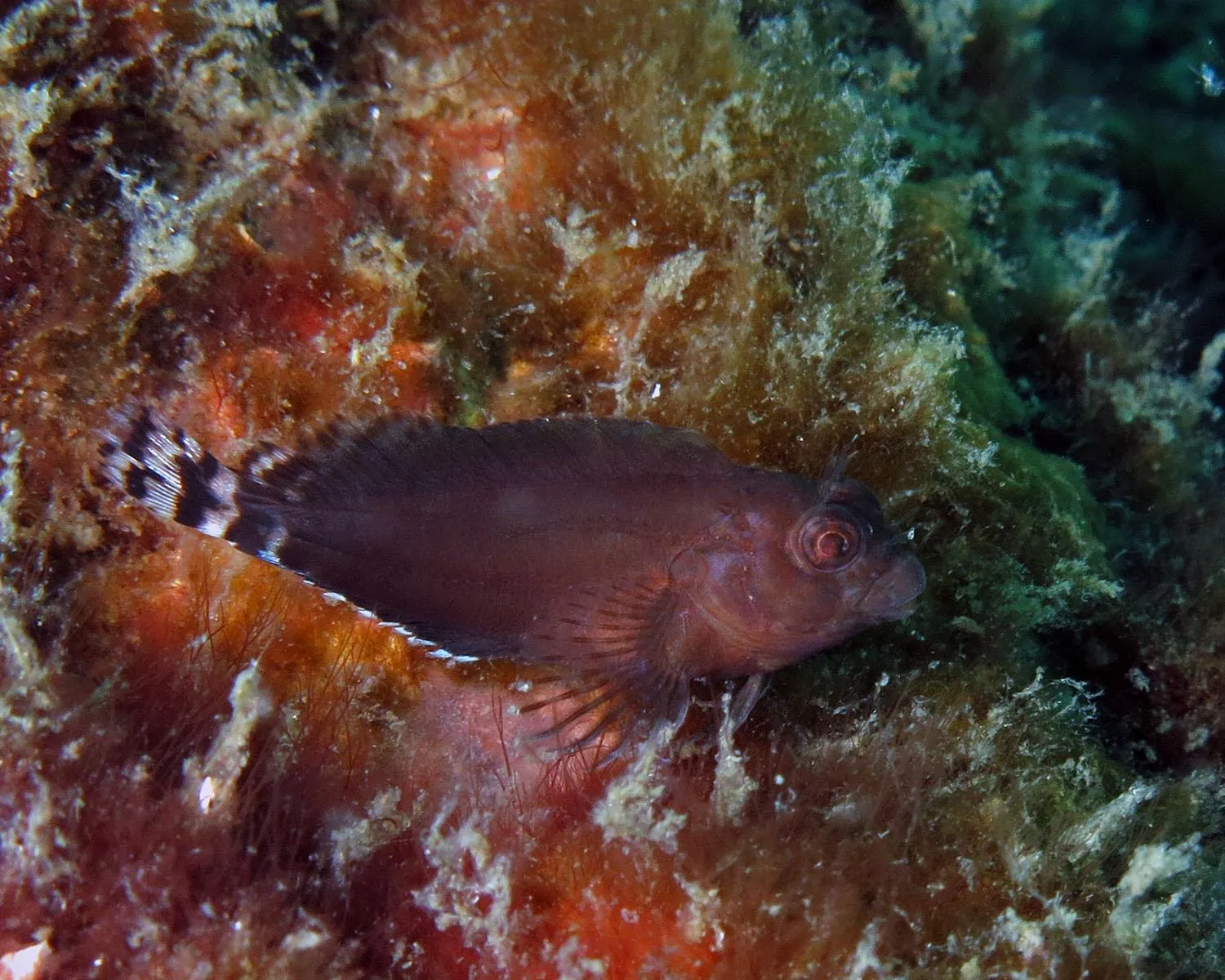
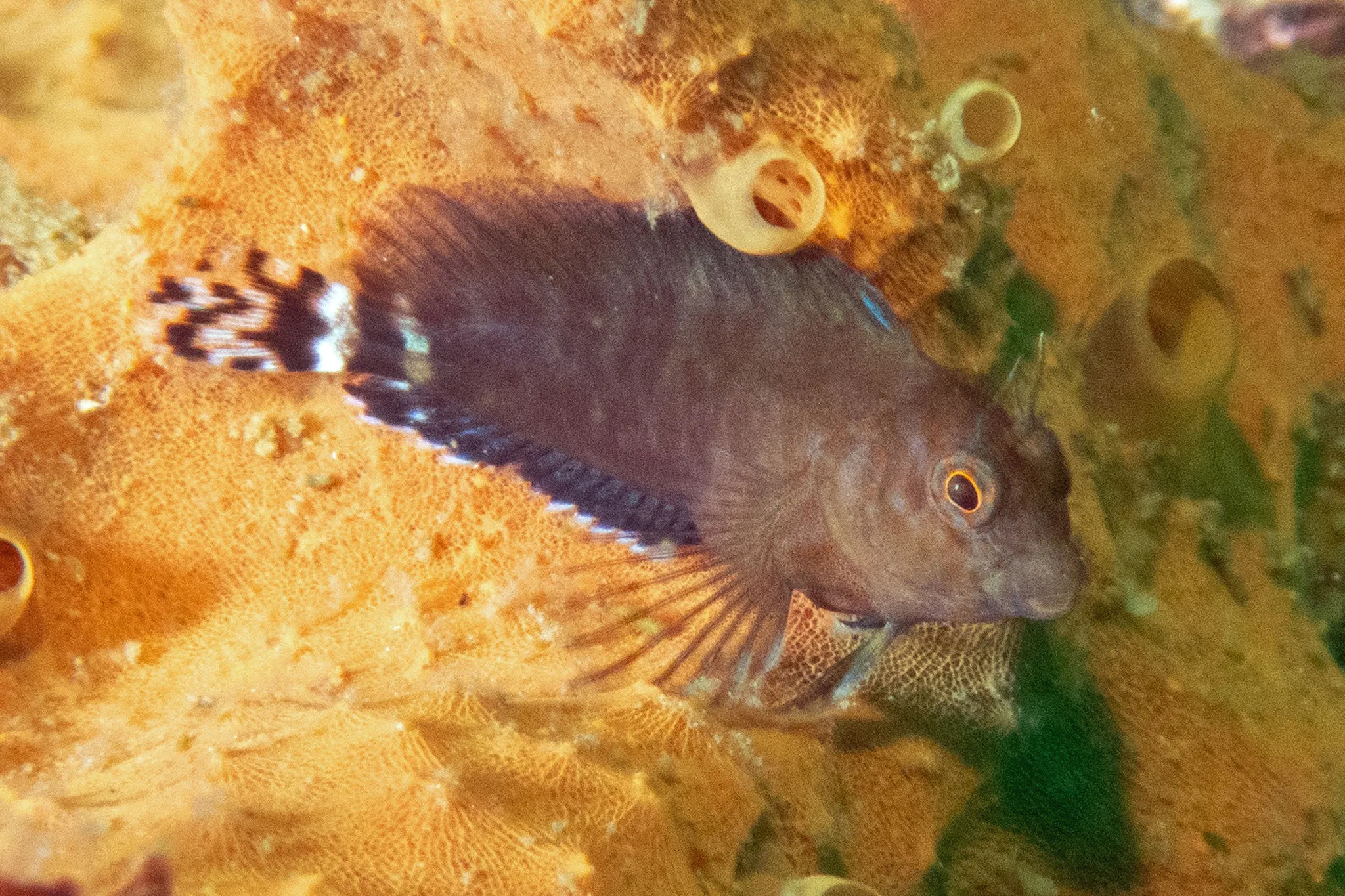
Dark brown to black body. May be plain with little patterns or heavily patterned. Alternating vertical white and black stripes on the caudal fin and base are always present; alongside a white outer edge on the anal fin. Body may have bands on the upper body separated by pale bands. Body and head can also be mottled with dark orange and dark brown blotches. Dorsal fin can be black or a mottled black and white. A blue ocellus is sometimes present between the first few dorsal spines.
Reaches 5.9 cm / 2.3 in.
Coral reefs and sandy bottoms.
2 - 23 m / 7 - 75 ft.


No morphological information yet, data is being added...
IUCN Marine Biodiversity Unit 2024. Hypleurochilus caudovittatus. The IUCN Red List of Threatened Species. Version 2026-1. Accessed on 16 September 2026.
https://www.iucnredlist.org/
Williams, J.T. 2025. Hypleurochilus caudovittatus. The IUCN Red List of Threatened Species 2025: e.T196687A67938484. Accessed on 03 April 2026.
https://dx.doi.org/10.2305/ .UK.2025-2.RLTS.T196687A67938484.en
FAO Fisheries Department. (2002). The living marine resources of the Western Central Atlantic. Volume 3: Bony fishes part 2 (Opistognathidae to Molidae), sea turtles and marine mammals.
https://www.fao.org/4/y4162e/y4162e00.htm