Species infomation
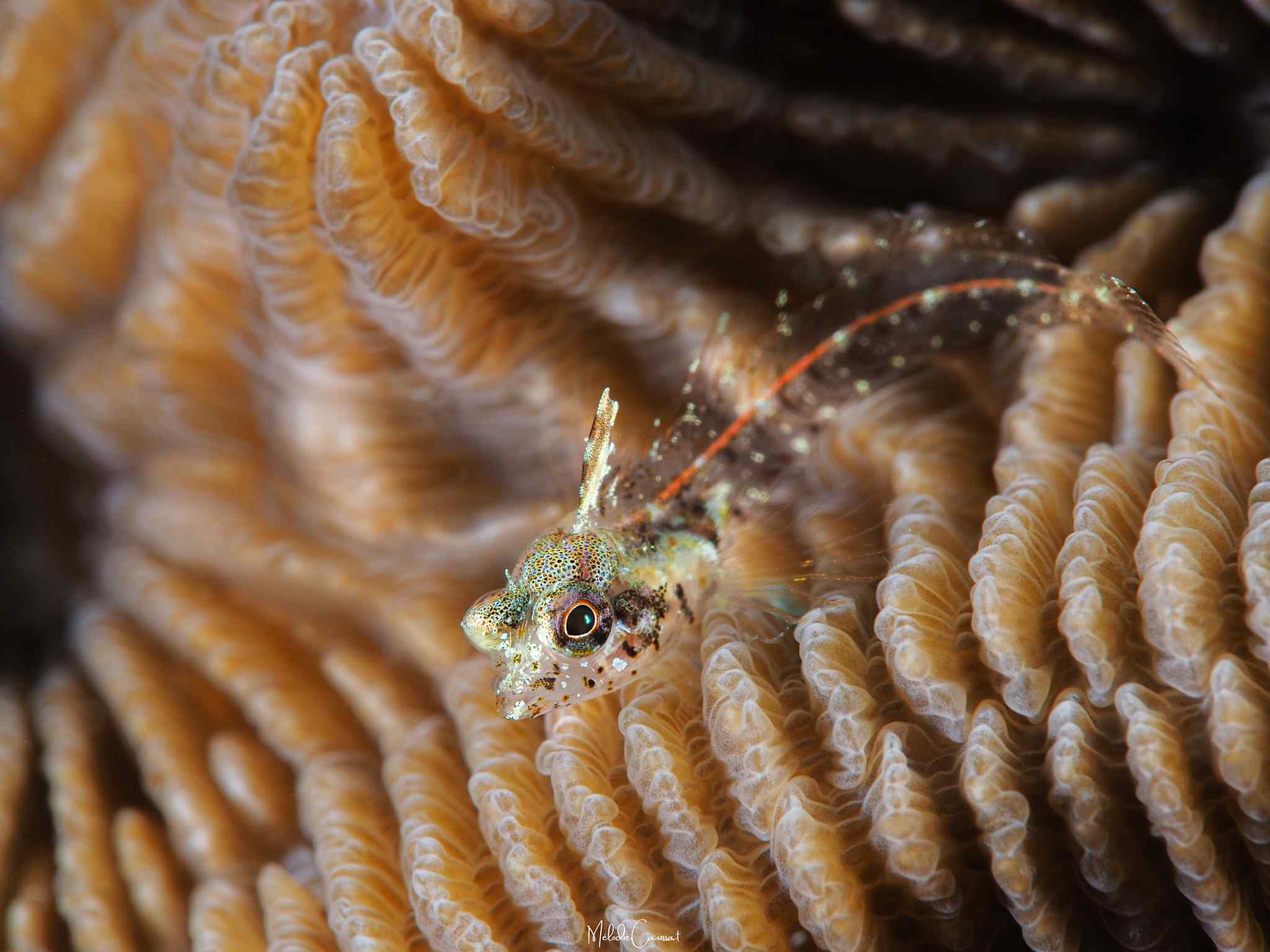
Distinctive features:
- Orbital cirri present.
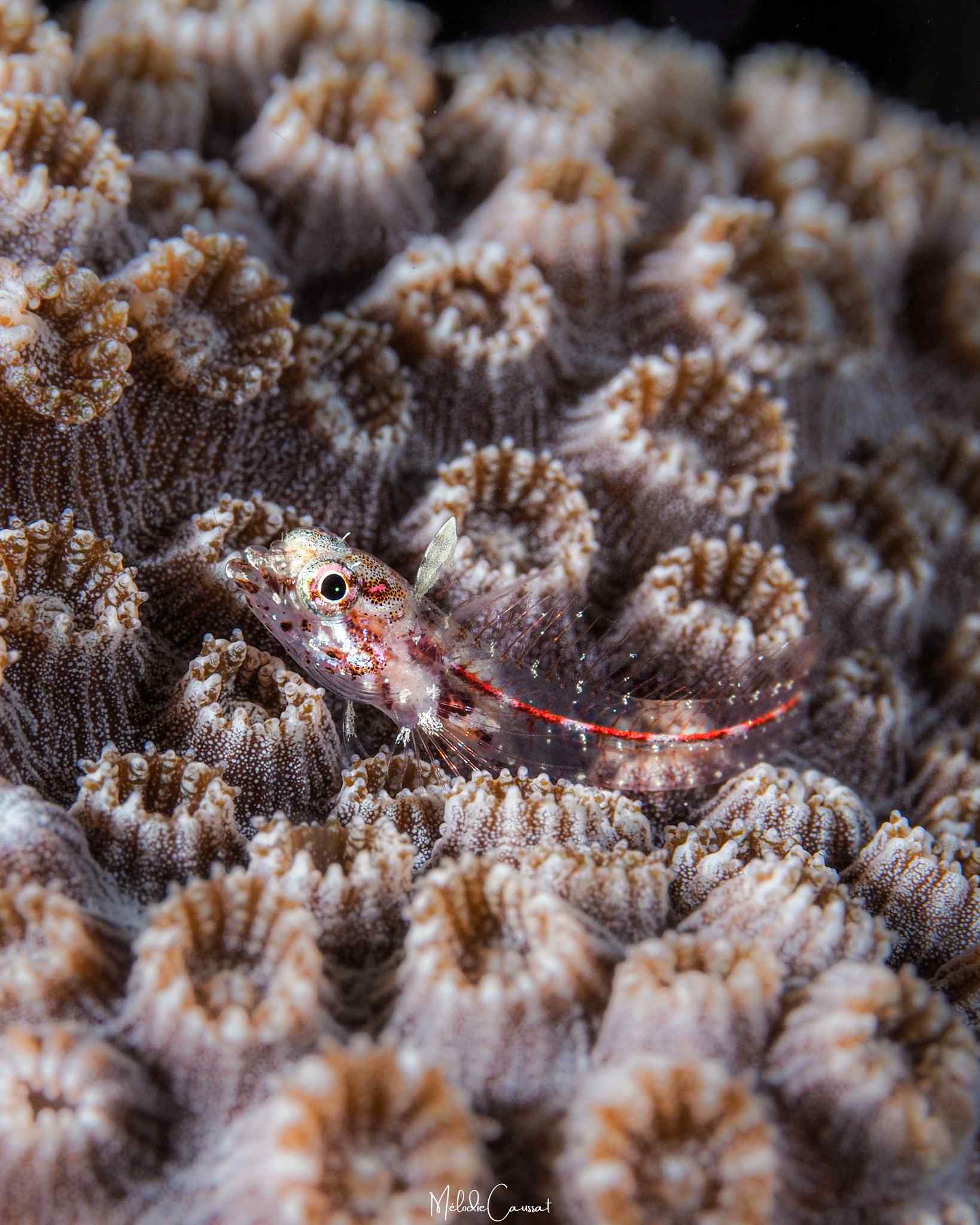
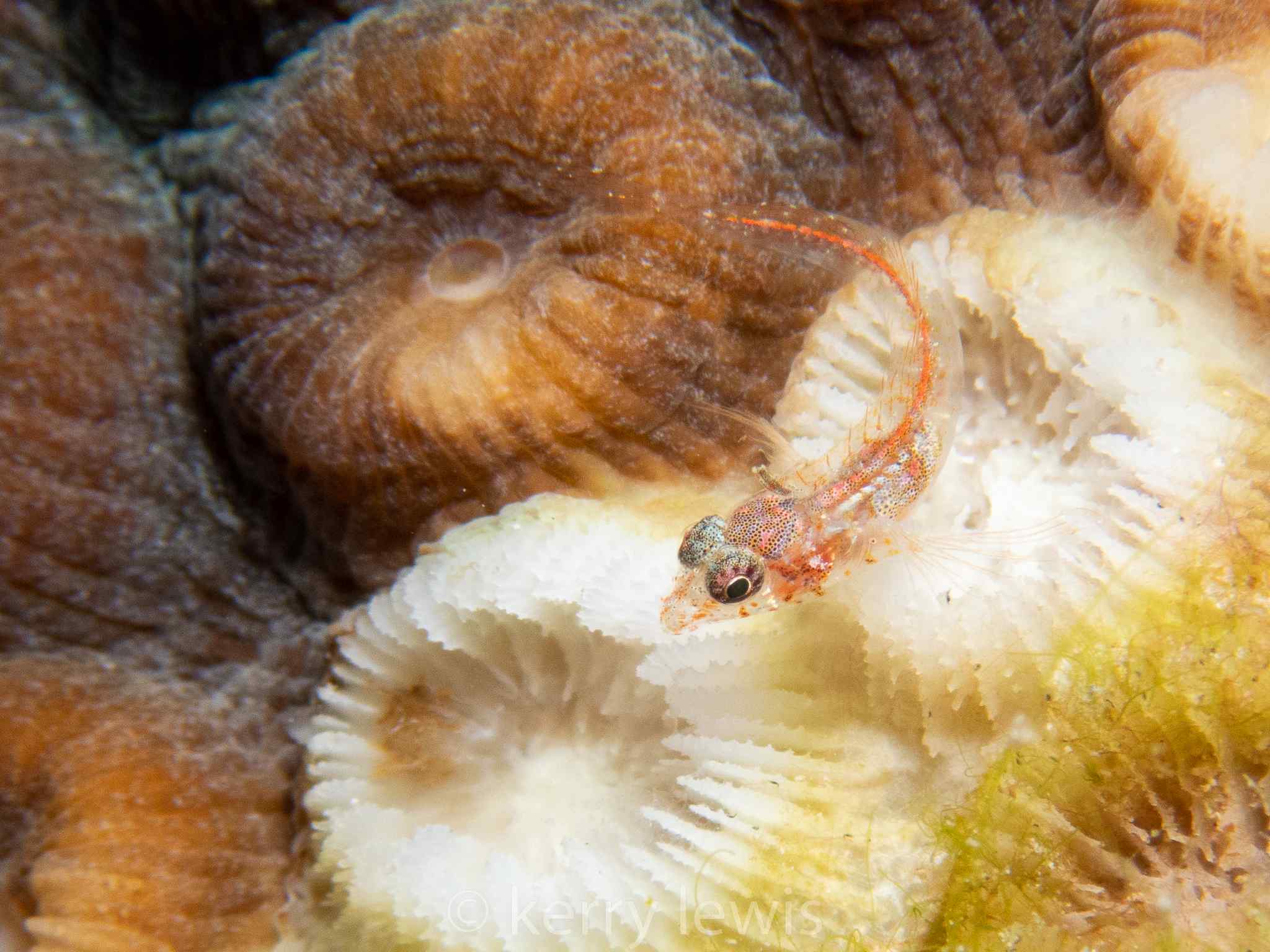
- Cranial pattern X-shape with outwardly curved lines.
- Breeding males with black head, front of body and dorsal fin.
Physical description:
Simple nasal and orbital cirri.
Females: first 2 dorsal spines elevated, ~2x height of following.
Colouration:
Females: largely transparent with red vertebral column. Cranial pattern pink and X-shaped, lines outwardly curved in a concave shape. First few spines with white membrane.
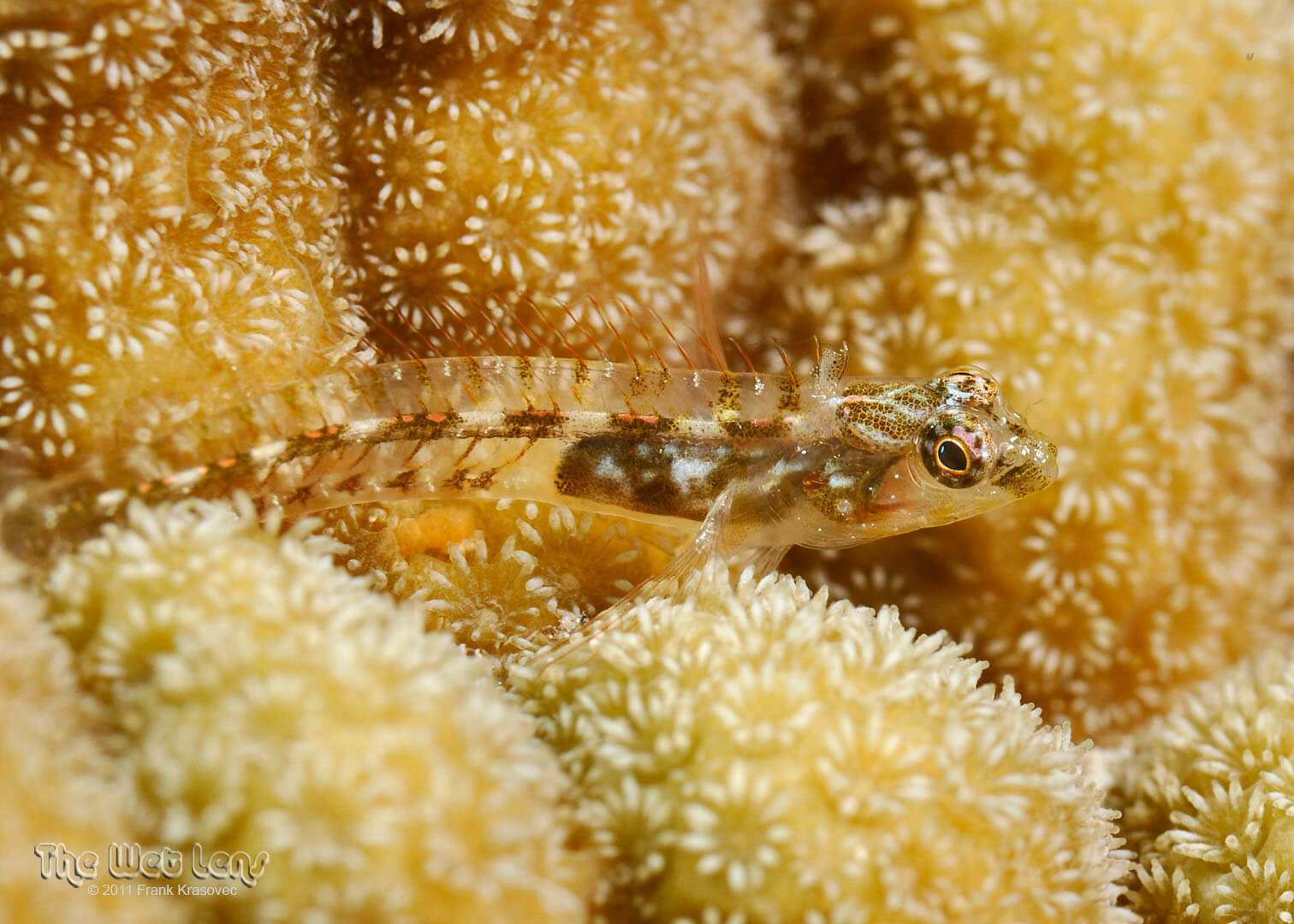
Immature males: dark purple/red with a green patch between eyes. Dark red vertebral column. Front of dorsal fin with some dark grey.
Breeding males: black head, iris and front of body. Rear cheek sometimes with white spots. Front dorsal fin often black but can be a greyish-blue.
Size:
Reaches 2.6 cm.
Habitat:
Found in lagoonal patch reefs, rocky dropoffs and oceanic reefs. Breeding males found in holes.
Species images and information
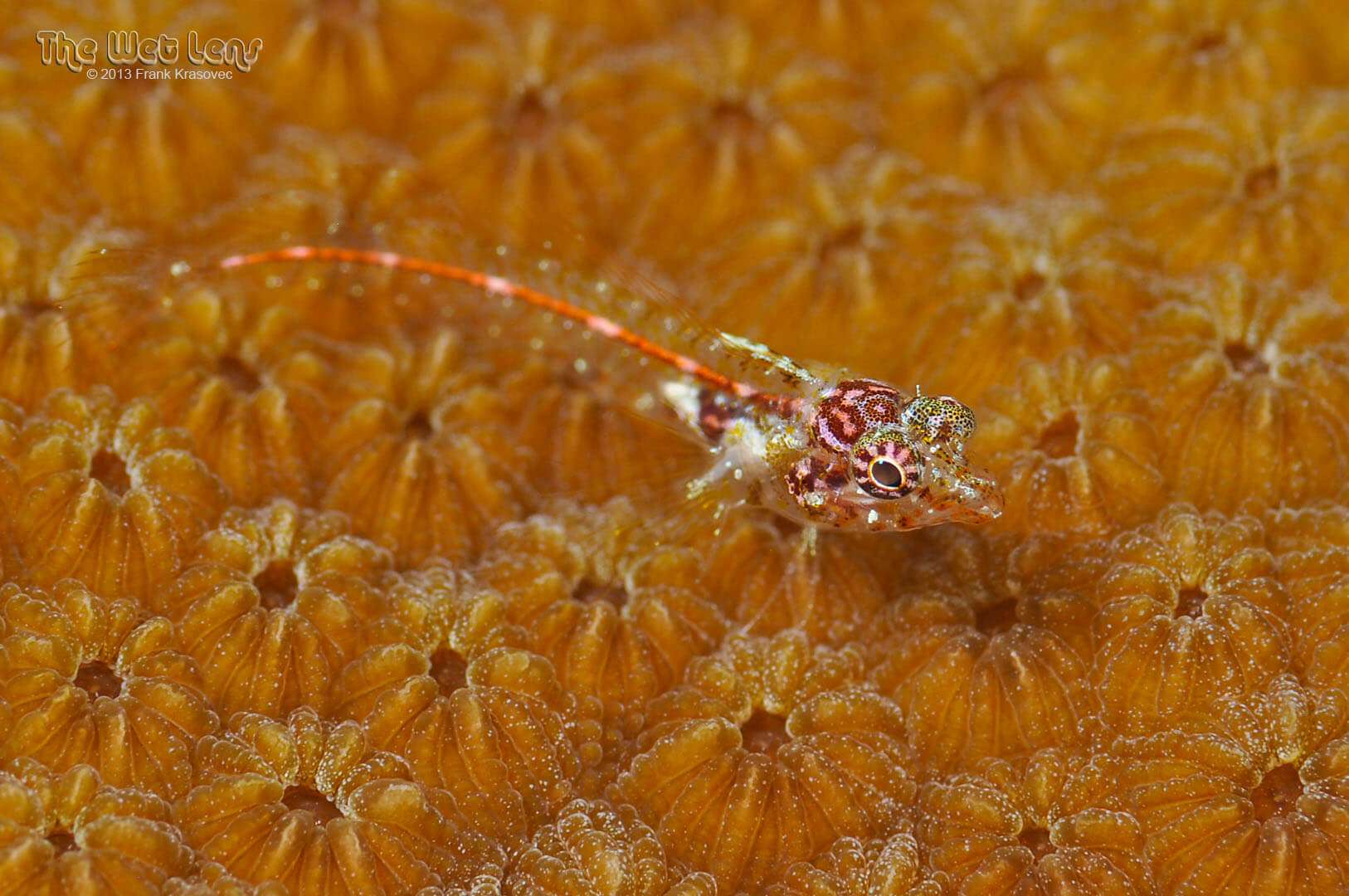
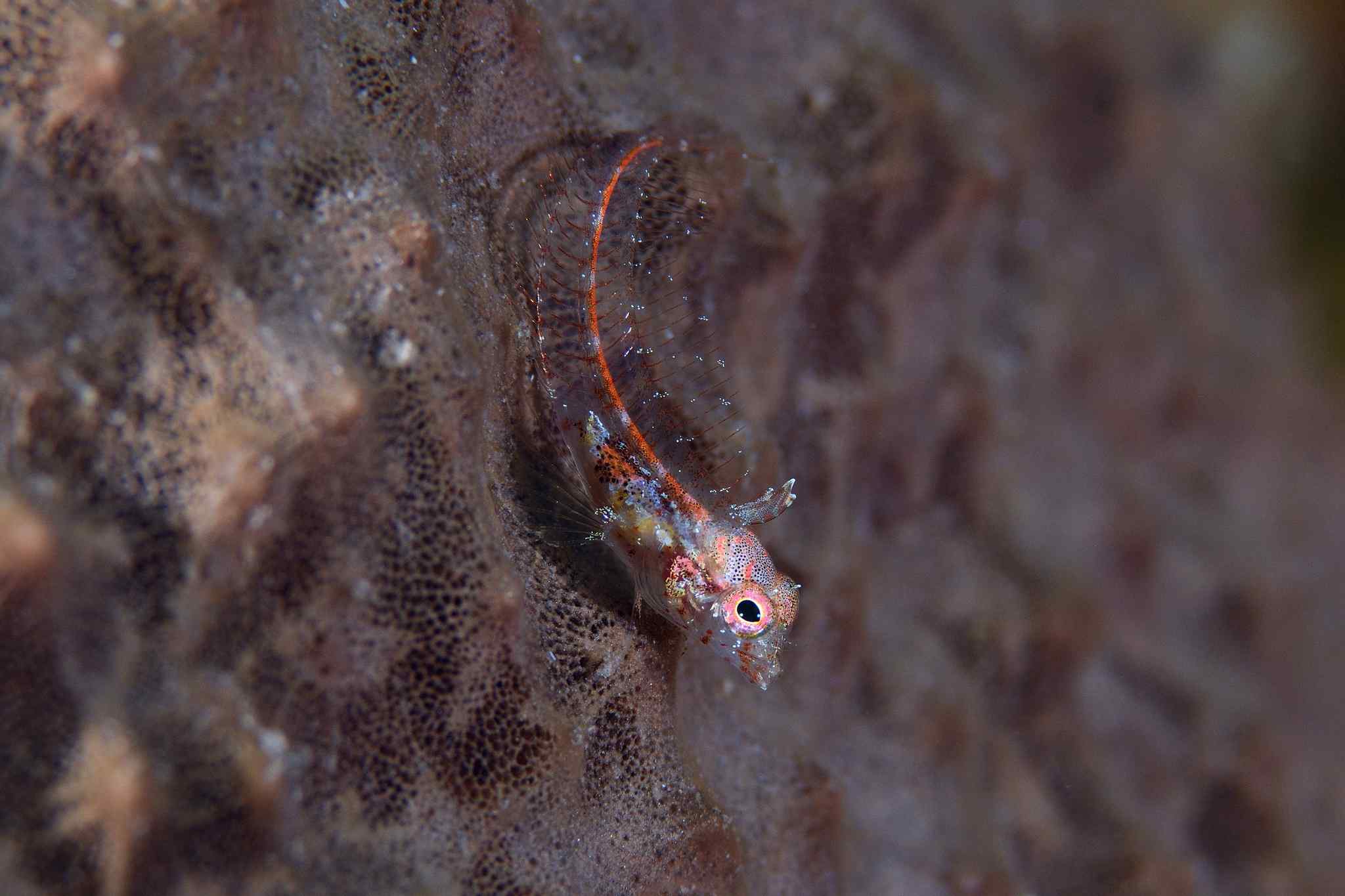
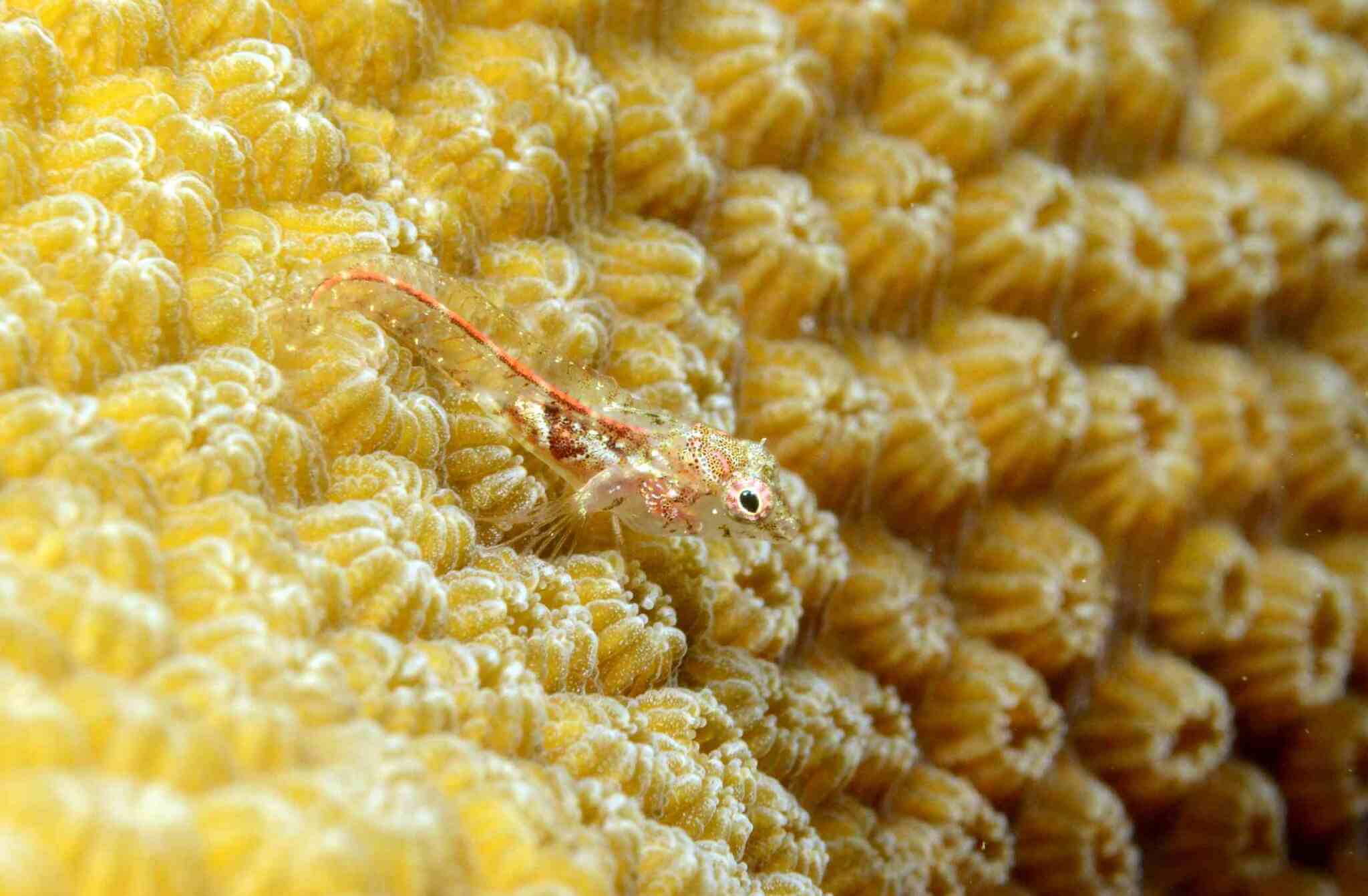
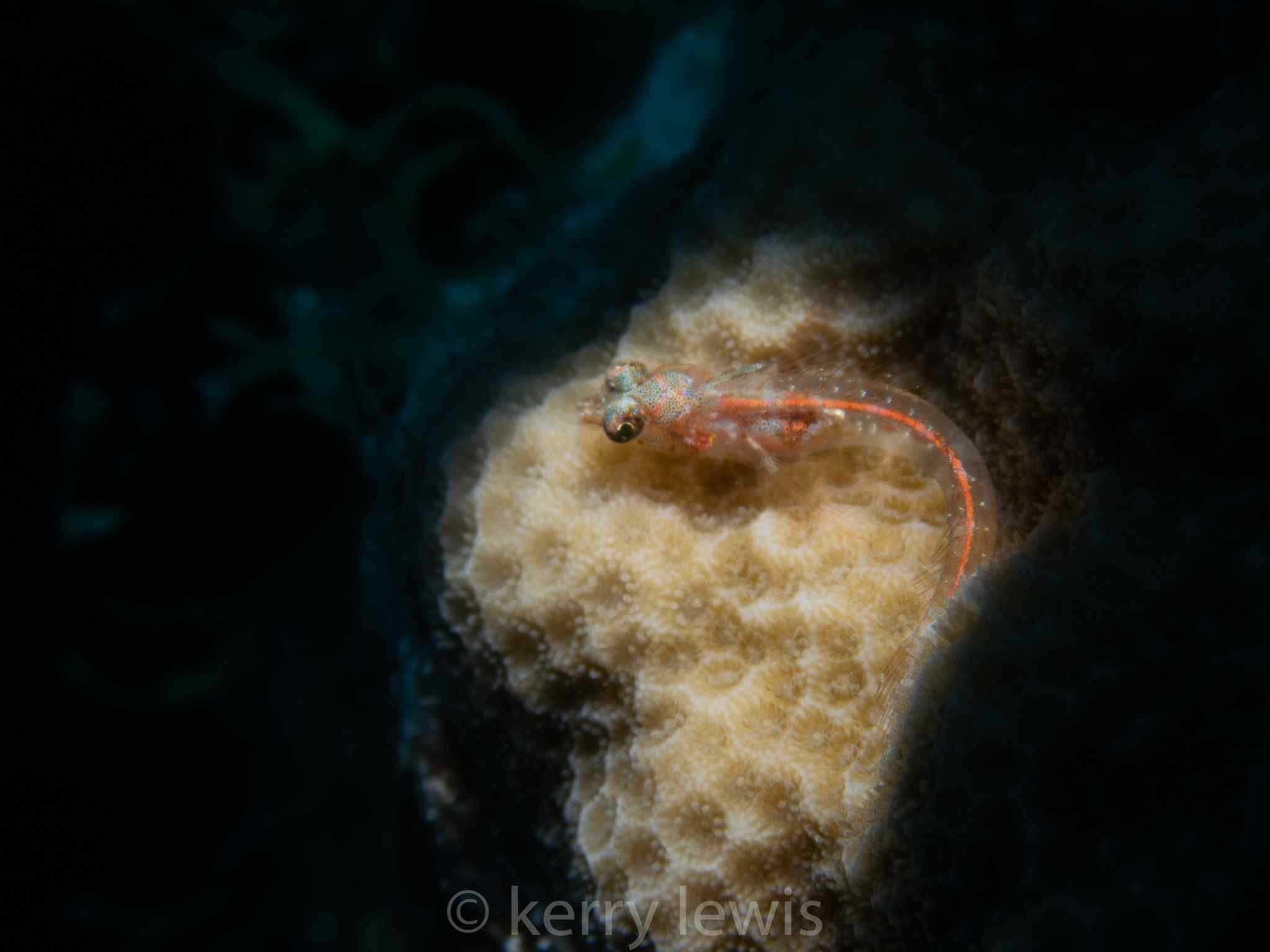
E. bahamensis has no orbital cirri. E. bahamensis has a cranial pattern of a Y-shape with a dot in the centre. E. leptocirris has 2 convex lines in a )( shape, both of which are broken.
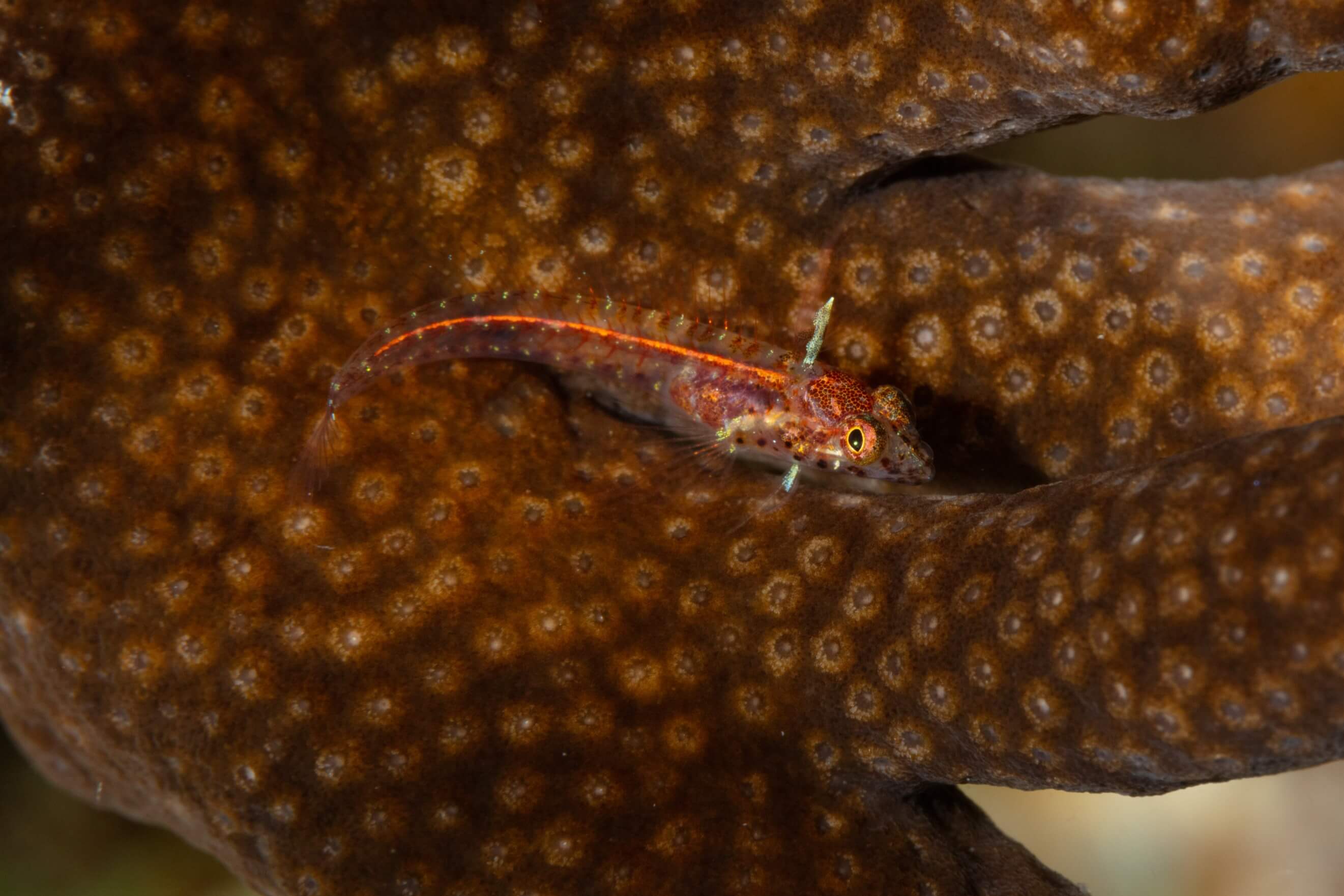
E. bottomei has no orbital cirri. Females of E. bottomei have a broad Y-shaped cranial pattern, E. leptocirris has an X with outwardly curved lines. Breeding males of E. bottomei have a pale upper dorsal edge.
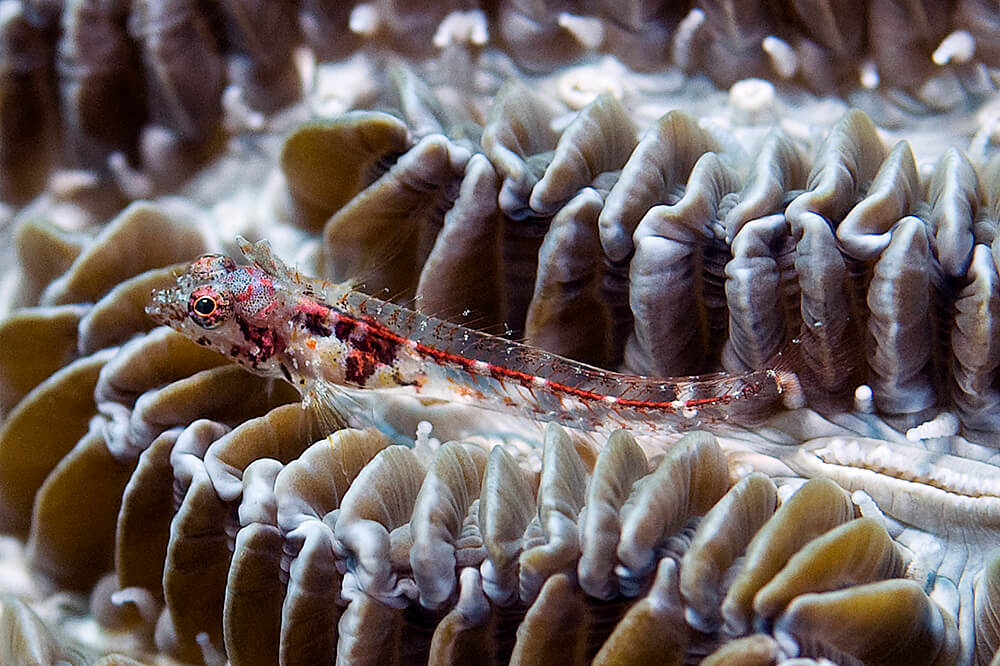
Females of E. carib have a cranial pattern of a mosaic resembling a U with a W below and with many loose spots, E. leptocirris has an X with outwardly curved lines and no spots. Breeding males of E. carib have a spike in the inital dorsal fin.
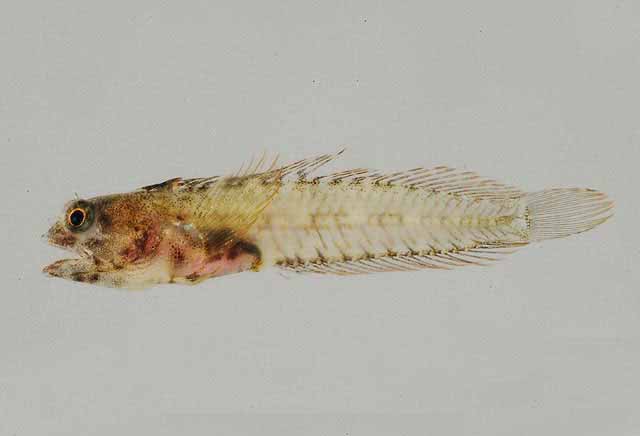
E. dianae has the initial dorsal fin black, white E. leptocirris initial dorsal fin is white. Breeding males of E. dianae have a short orange banner and E. leptocirris has none.
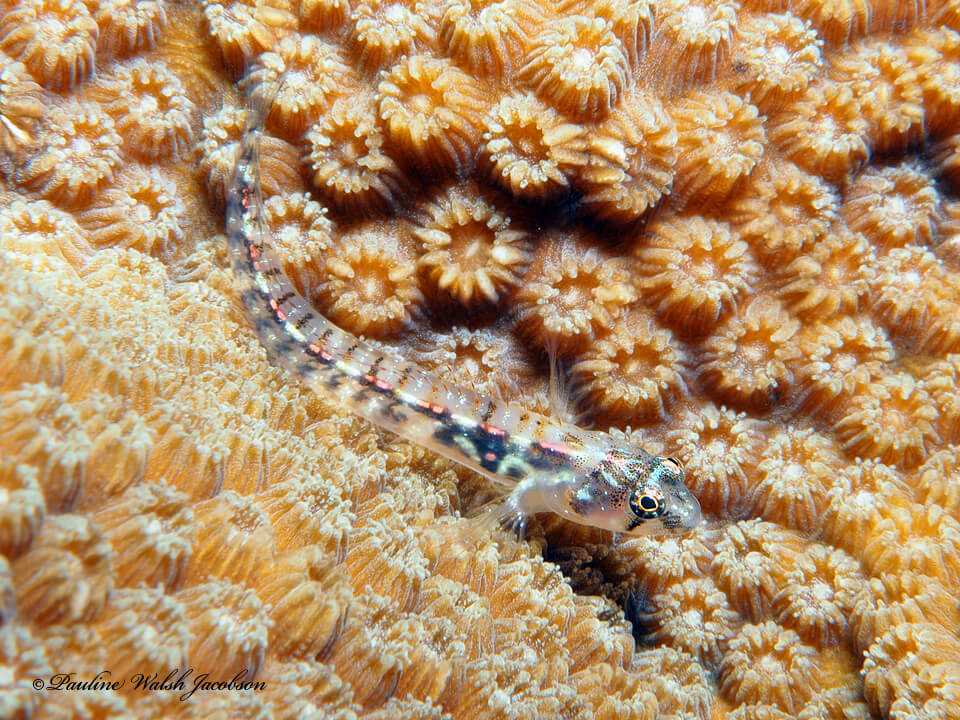
E. pricei has no orbital cirri. E. pricei has a Y shaped cranoal pattern with curved lines on either side and loose dots, E. leptocirris has an X with outwardly curved lines and no spots.
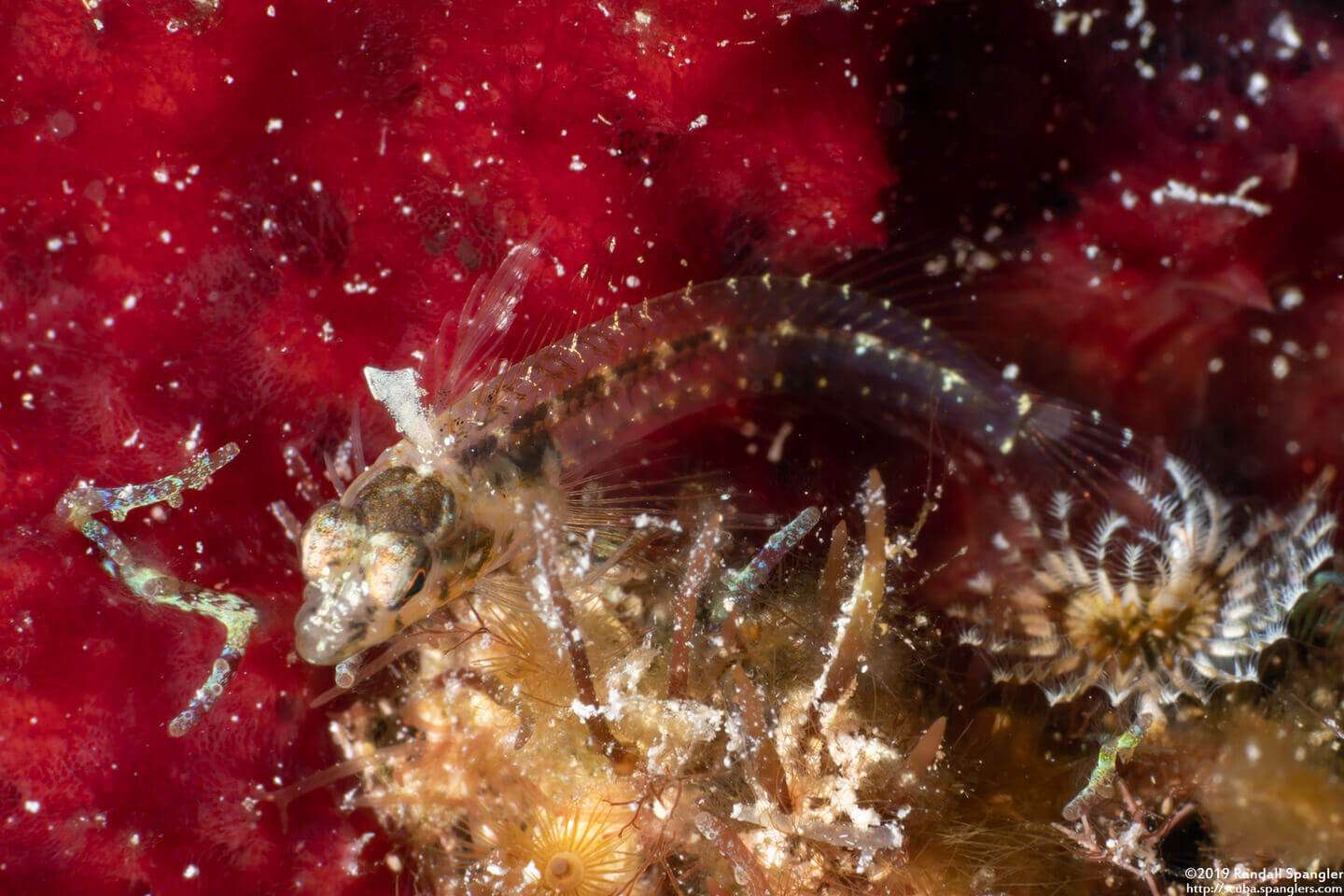
E. ruetzleri has no pink and is instead largely brown with some blue spots while E. leptocirris is largely a pinkish hue. Breeding males of E. ruetzleri have the first dorsal spine slightly elevated, while E. leptocirris is straight and level.